It’s essentially been 3 weeks since MCAD got out for the summer. Since then, I’ve been trying to substitute teach as much as possible (and as much as tolerable…being a sub is not always the easiest gig). This hasn’t left much time or energy for my art practice, but with only one week left til MPS lets out for the summer, I thought it was about time for me to work on one of my goals – viewing shows and thinking about them more critically.

I chose to start with Amanda Degener’s show, “Vanishing Flora,” at Northside Artspace Lofts. Amanda is the former business partner of my papermaking professor…heck, she was the papermaking professor here before Bridget. I was planning to attend the opening, since my classmate Yiran was helping at it, but I had finally started my coveted letterpress course, which met at the same time, so I figured I’d view the show later. I didn’t really know what to expect, only really knowing her work for Cave Paper, so I was floored when I saw her pieces were not only handmade papers, but also utilized print and collage.
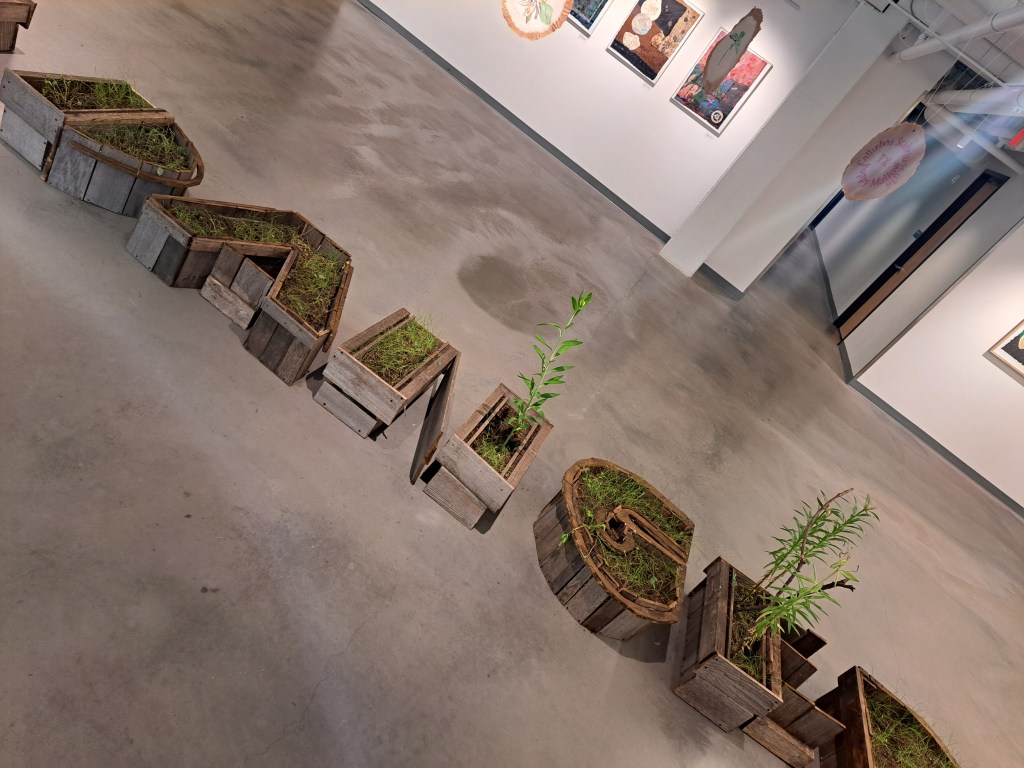
Something that really struck me (a paper heathen) was how strong the connection is between her work and the materials it’s made from. When I’ve been thinking about paper, I’ve been thinking more about cultural connections, which makes sense, I guess, given what my work focuses on. However, paper is made from organic fibers, and her works really emphasized that – the message itself in many of the pieces was interwoven with the material. Her care for the natural world that creates these fibers was particularly evident in the installation in the middle of the room. 8 planters containing indigenous species spelled out “IN DANGER.” Hanging over them were paper discs illustrating some of these endangered plants, with their scientific and common names. The gallery manager (?) explained that there had been frozen fiber also hanging during the opening, which dripped into the planters as they melted.
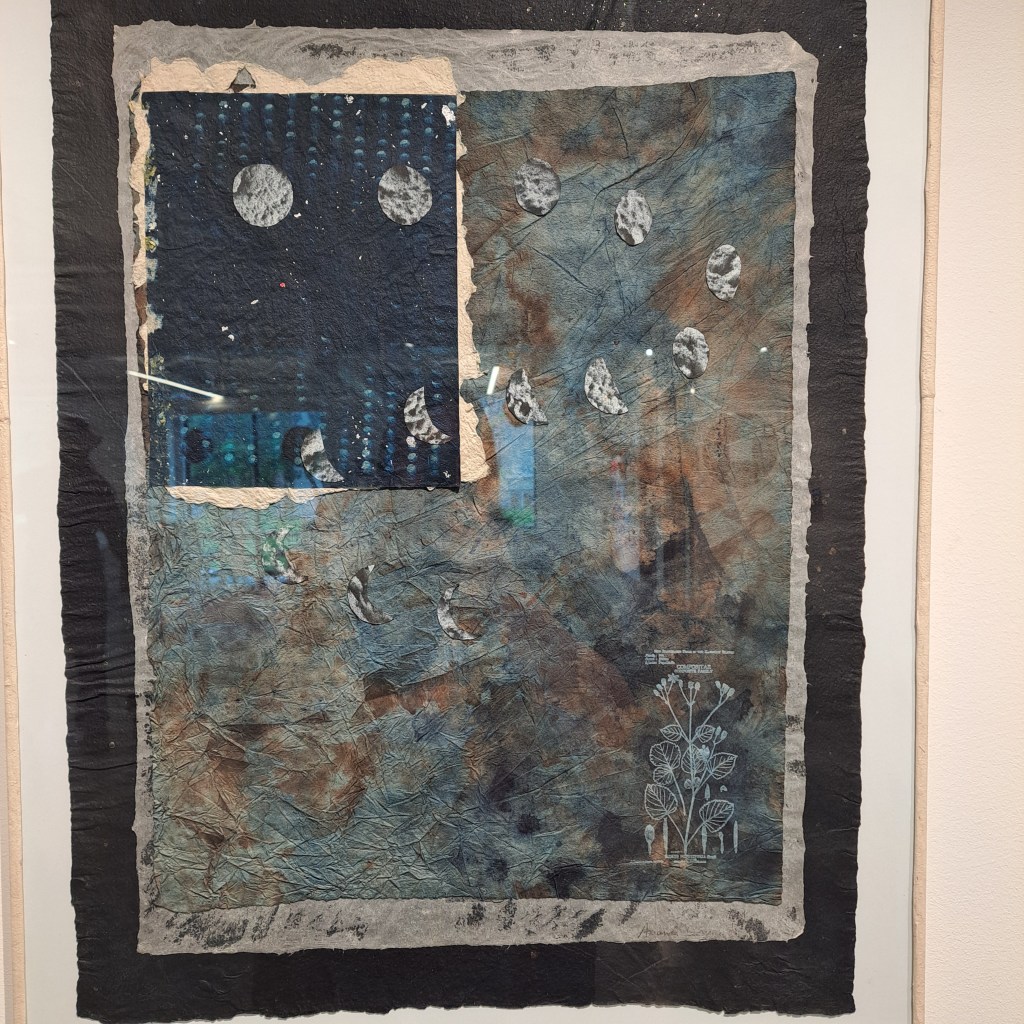
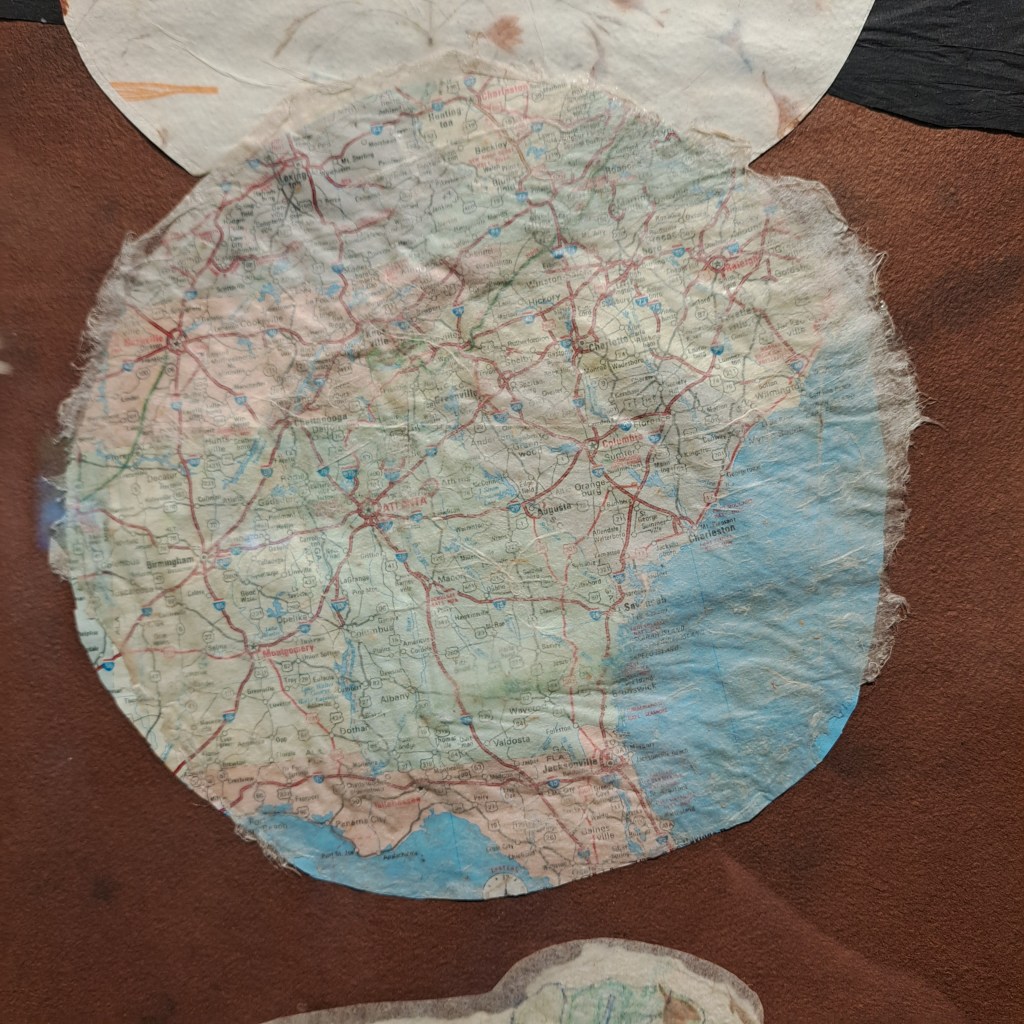
What was really fascinating for me, though, was the integration between imagery, material, and processes. My use of paper as a collage material led me back to making paper, in order to get material that was exactly what I needed, rather than making do with what was available. I came into my MFA thinking that was what people meant when they talked about materiality, but over the last year have slowly been learning that it’s not, and trying to wrap my head around what is (don’t judge me, okay?) I might have gotten it a lot quicker if I had seen Amanda’s work sooner. It’s clear to see that she is exploring what the fibers themselves can do, not just in forming a sheet of paper, but also in taking on pigment, in being printed, in collage. Each of these processes work together in her creations.
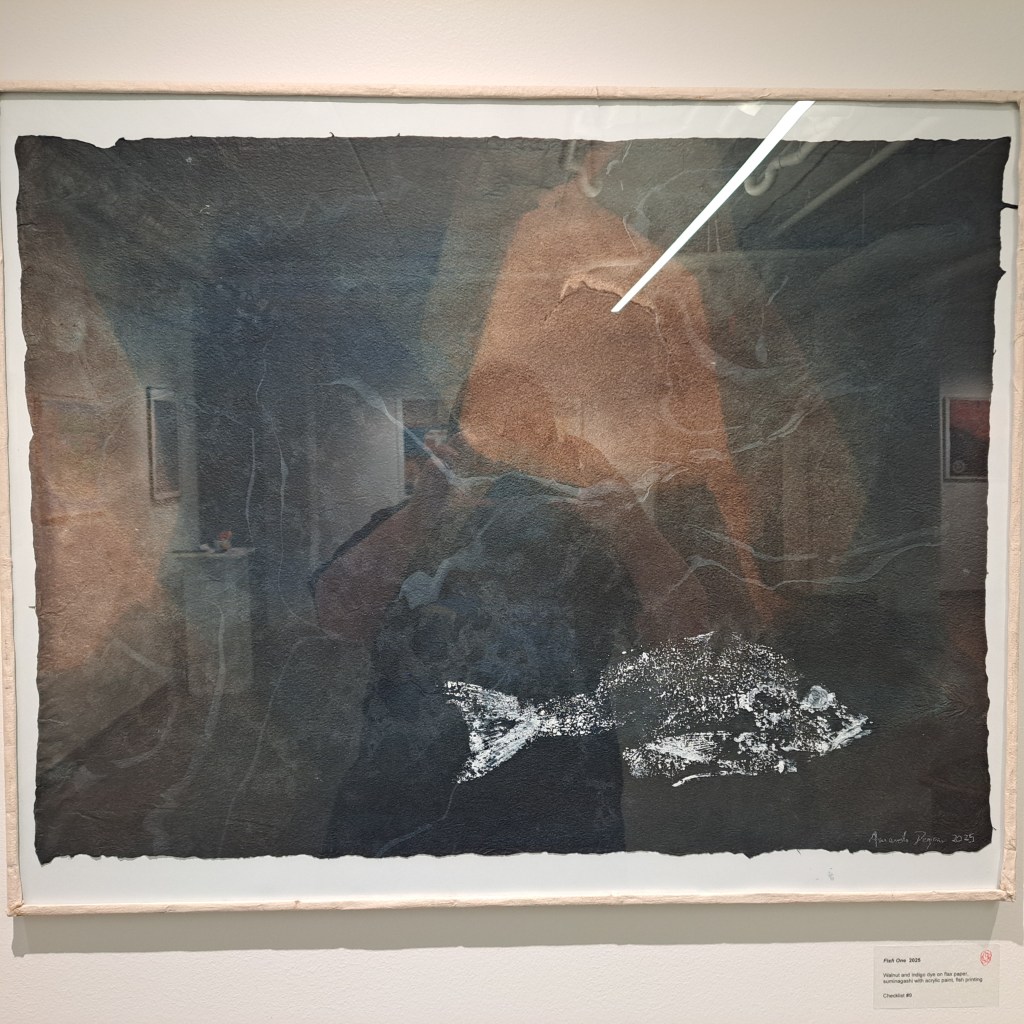
I found her artist statement likewise edifying. I really enjoyed reading her description of how when she’s busy in the studio, the chatter of her brain gets turned off through the busy-ness of her hands. Lately I feel like I’ve been in my head too much. Partly this is because sometimes when you are substitute teaching, that’s all you can do, and at least my brain can start thinking ahead to what I might work on once I have a bit more time. However, I’ve also been bogged down thinking about how to break through the roadblocks I seem to be coming up against. Not going to lie, letting my hands turn off my brain for a while is an attractive proposition. So maybe when the paper studio opens back up next week I’ll have to spend some time just doing, and not worrying about what it’s for.
I know…it’s a funny thing to say while I’m blogging rather than actually doing.
Anyways. Something else that was interesting to me about Amanda’s work was how she uses illustration, while creating art that isn’t illustrative. This is something I’ve been grappling with in my practice; I don’t want to be an illustrator, but my work is about sharing cultural understandings and experiences, and involves some degree of illustration. I’m not convinced I’ve finished processing the layers on which she manages this, but it’s both expertly done and not overwrought.

Also, I feel it’s important to point out that each of Amanda’s works is unique. One of the reasons why I haven’t really tried yet to make a series of work is because I feel like a gallery full of paintings that all look more or less the same is boring. As a viewer, if it looks like the same elements were in a box (or, let’s say, canvas), and the artist gave it a good shake each time, but the only thing that’s different in the end is the placement of the elements, or the proportions of the colors, it just seems very half-assed to me. I talked to my mentor about taking an idea and chipping away at it before the end of the semester, but I still wasn’t sure how that might look for me. I feel like Amanda’s show provided some clues.
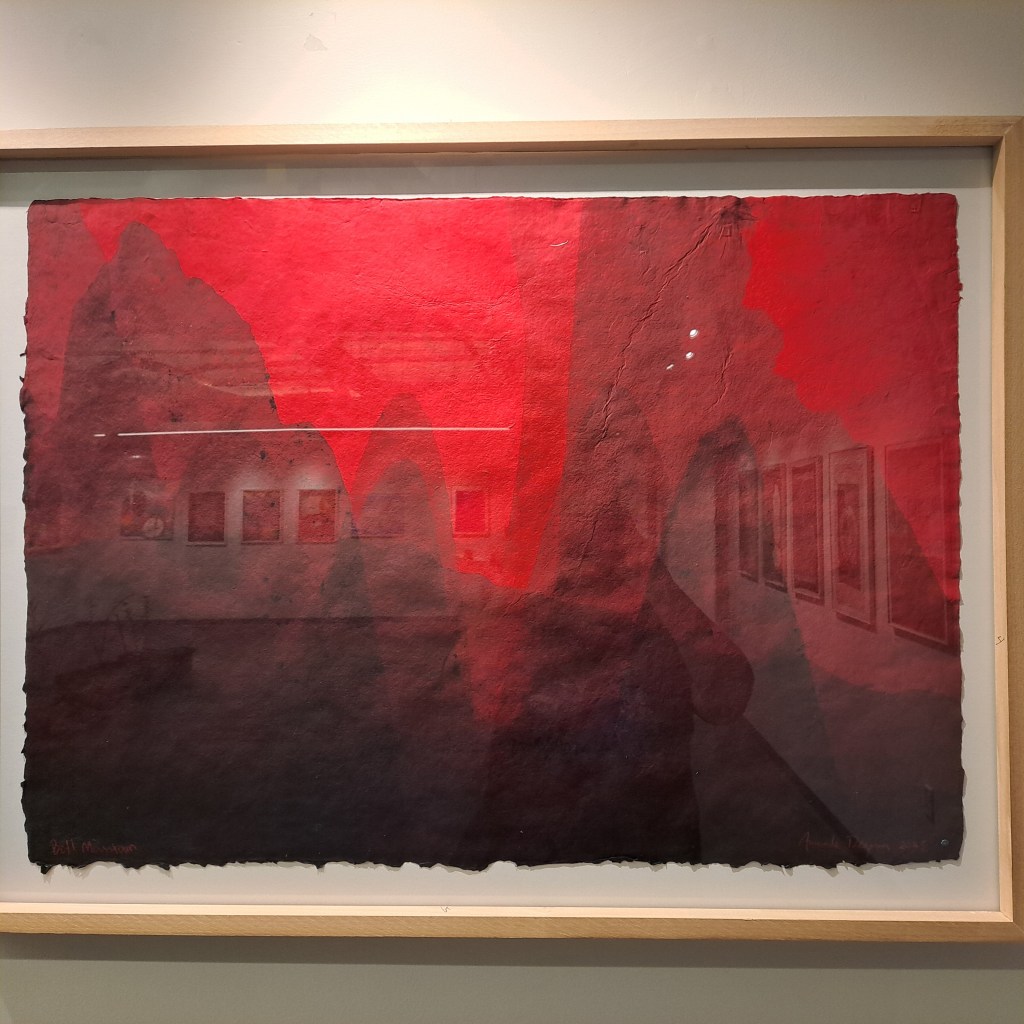
Seeing the ways that Amanda brings all these elements together was really inspiring. I’m still not sure what the “right” thing to do next is, but it’s given me a lot to think about and made me really antsy to get into the paper studio and start figuring it out.
 Becky Mutrux
Leave a comment