





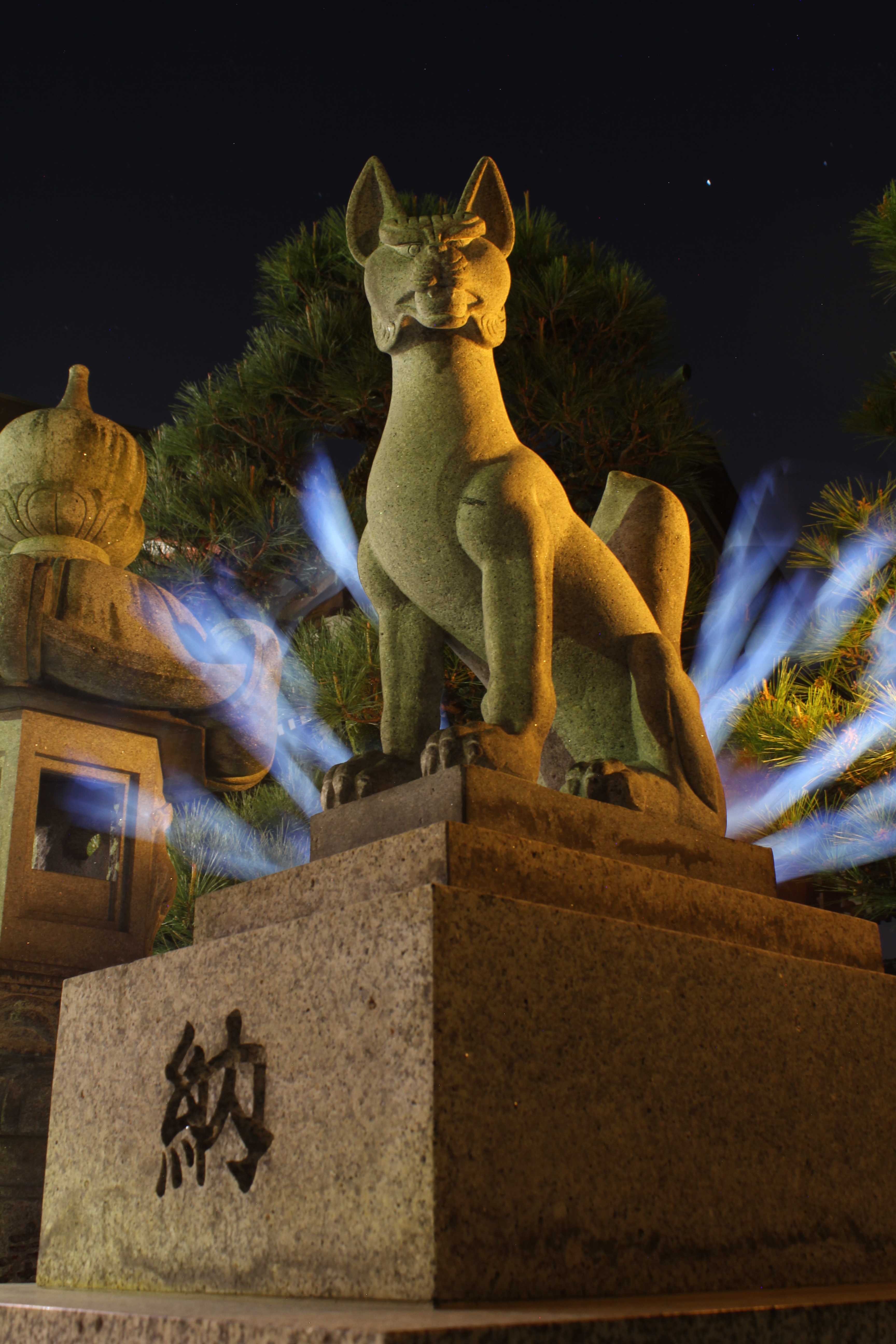
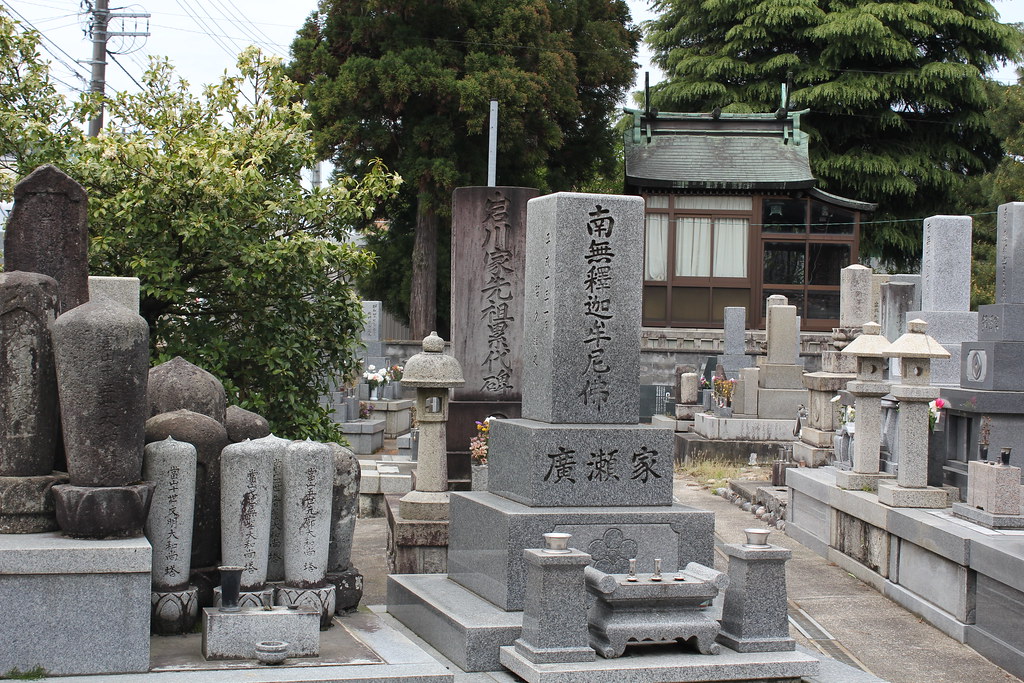
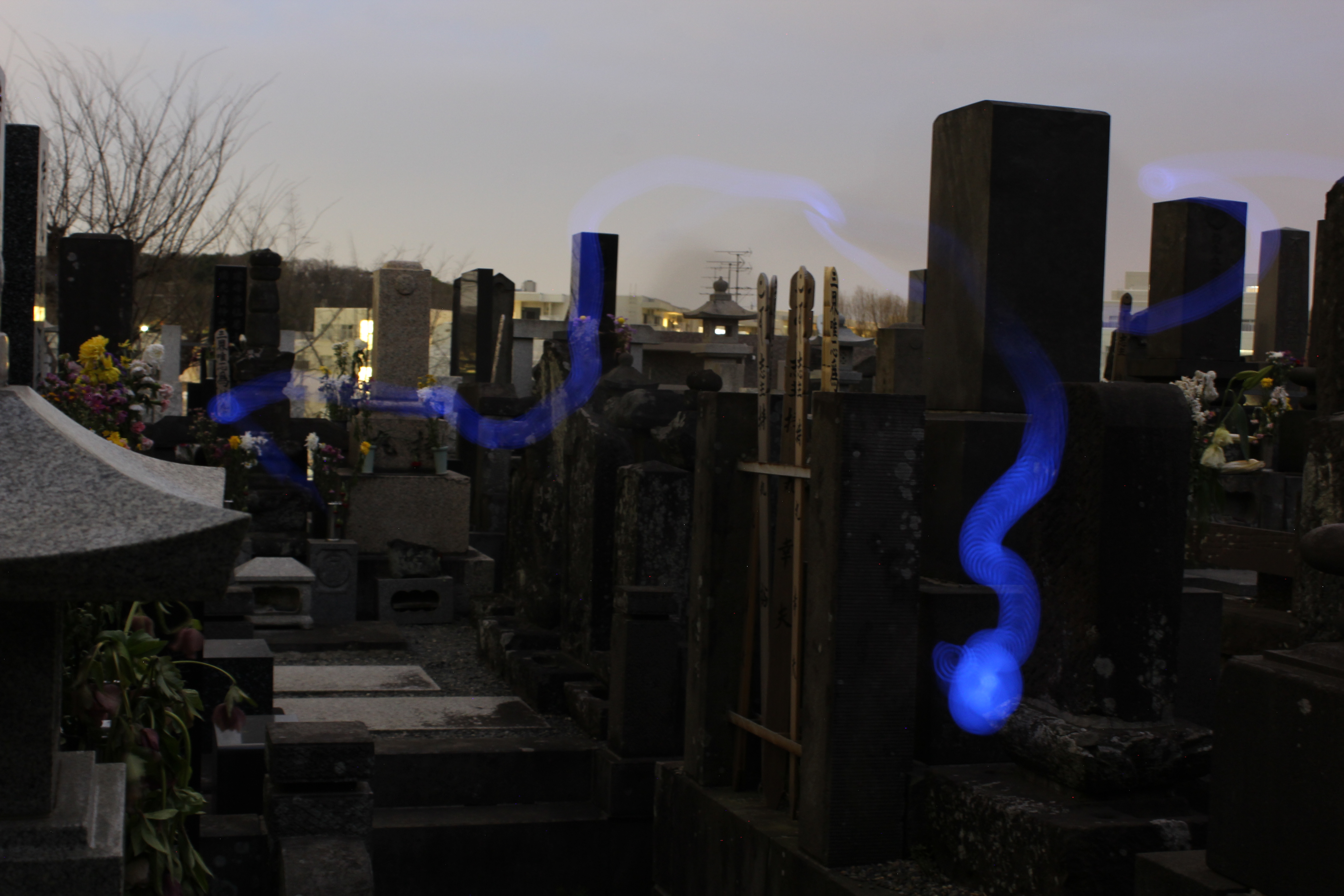
We live in an age of contradiction. According to the internet, if you don’t have pictures of something, it didn’t happen. At the same time, the use of photoshop has become so ingrained in contemporary visual culture that we can no longer claim that seeing is believing. This body of work aims to draw on both sides of this paradox as I explore Japan’s folklore surrounding the supernatural.
Japan has a rich culture surrounding the paranormal. The terms youkai and yurei are catch-all words for what in the West we call demons and ghosts, but they include a host of creatures, each, according to the lore, with their own distinct appearance and habits. Artists continually draw on these legends, from ukiyo-e printmakers to contemporary animators, with the result that they are a well-known and easily recognizable part of Japan’s visual culture. After exploring long-exposure photography I felt that this technique had great potential to uncover the hidden world of Japanese folklore.
My photographic practice up to this point has been documentary in nature, showing the places I’ve been and the people I’ve visited. In Photography: A Critical Introduction, Wells states that “Historically, tension between the photograph as document and the personal expressiveness of art has been at the heart of debates as to the status of the photograph as art” (Wells, 2009, p. 260). One of my goals in exploring Japan’s supernatural traditions was to bridge this philosophical gap, drawing on my strengths as a documentary photographer while introducing a more expressive artistic element to my work.
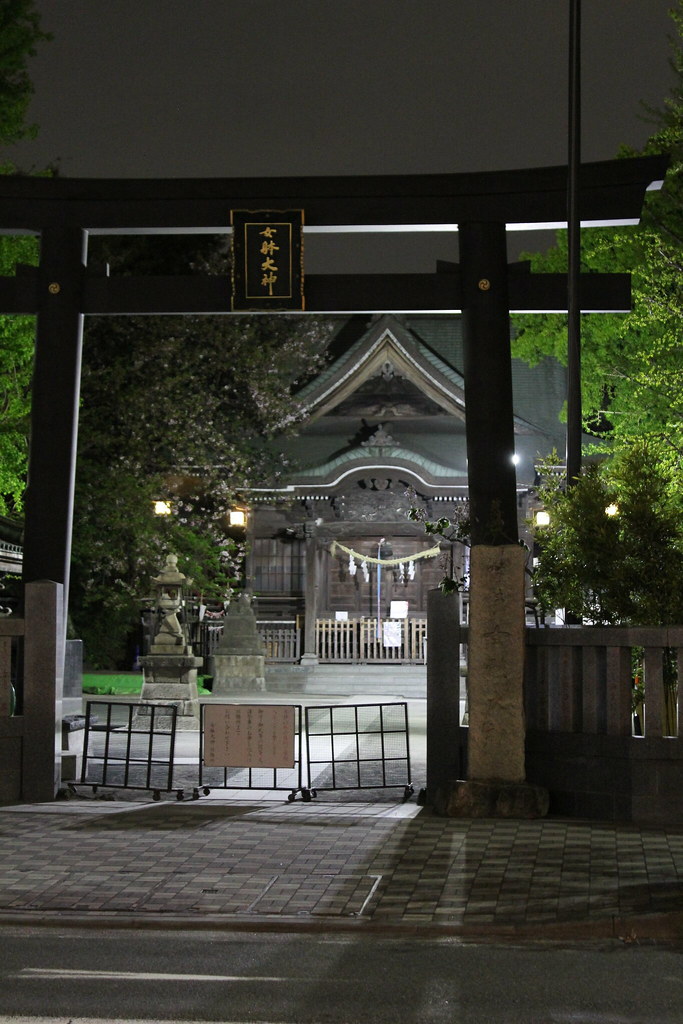
Throughout its history, photography has been used to present similarly constructed realities. Sometimes this construction is subtle. The photographer Edward Curtis published images of Native Americans which documented a romanticized vision of these peoples, using clothing and props that helped to tell the story he wanted to share; a story which upon closer inspection proved to be fiction (PhotoDocus, 2014). At other times, it is more blatant. Such is the case of the Cottingley fairy photographs produced by Elsie Wright and Frances Griffiths between 1917 and 1920. Some of these realities are unintentionally presented. Photos of far-off places as seen in National Geographic, in a grandparent’s scrapbook, or even on a friend’s facebook timeline may give the viewer a mistaken impression of what those places are actually like. My work embraces this tradition while subverting it, using architecture specific to Japan such as temples and shrines as a backdrop to present the unseen world in which to this day the Japanese, at least to some extent, still believe.
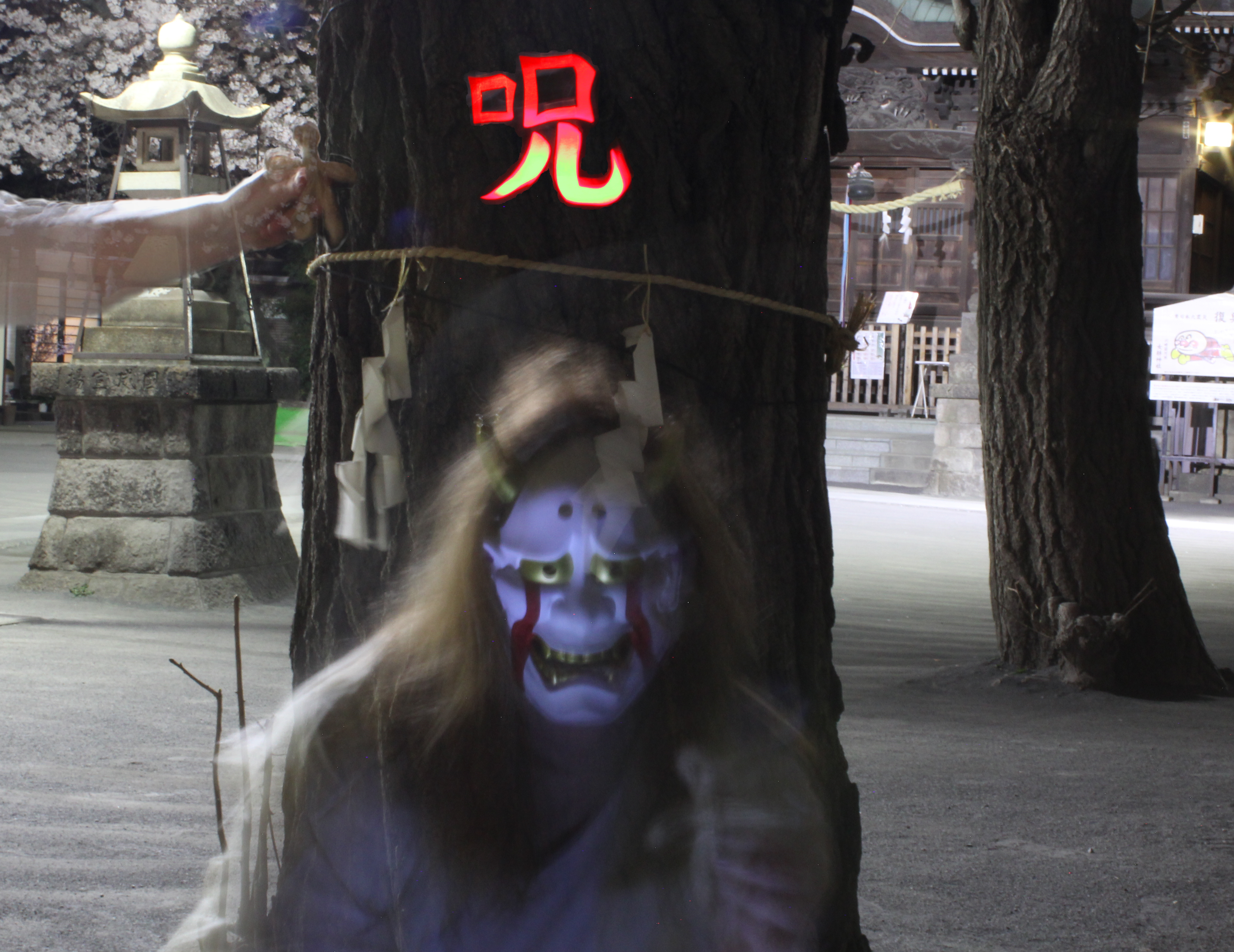
In order to create these images, I used a variety of approaches. During my exploration of photography techniques this term I was particularly inspired by painting with light. In order to better understand the possibilities of light painting, I studied one of its progenitors, Man Ray. In 1935 he produced his first light painting, which he called space writing (Space Writing, 2011). It is a self-portrait in which his face is obscured by the writing he has created with a penlight. Although I am using light painting in a similar way, I find Man Ray’s photograph particularly applicable to my body of work because of his interest in surrealism, and the worlds of the mind. Unlike his automatic writing, though, my use of light painting is deliberate. The lines and shapes I include in my work are by no means random, but rather connect with the traditions of Japan’s supernatural beliefs. This is done specifically so that viewers familiar with youkai stories will recognize them.
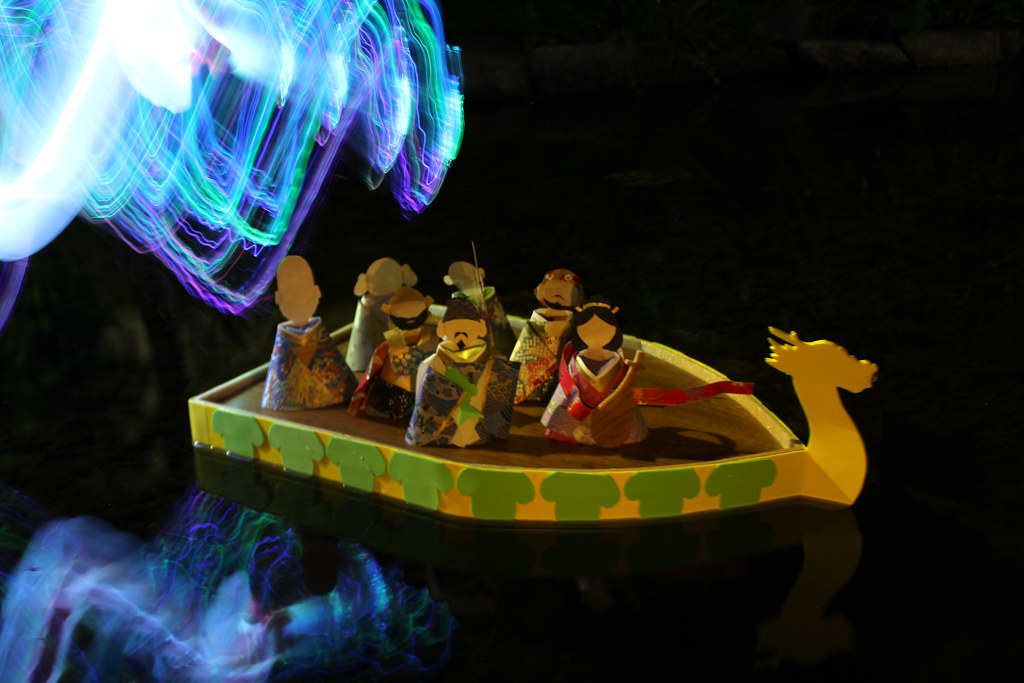
I feel my work also has a connection to that of Sandy Skoglund. As I planned these images, I realized that I would not be able to capture these creatures merely with light painting. Skoglund creates and photographs installations where man and nature interact in surreal ways, sculpting the actual animals that inhabit those spaces. Similarly, I spent a great deal of time creating some of my subjects, notably Japan’s seven lucky gods and their treasure ship. However, in contrast to Skoglund’s carefully crafted rooms, my pieces interact with the spaces of the real world, spaces which feel familiar to residents of Japan. Her work also relies largely on color to create emphasis and mood, while this series of photos uses light and shadow much more heavily.
When I first considered Japan as the subject of this portfolio I planned to do so in a very intellectual way, depicting the reality of Japan behind the exotic image most Westerners have of geisha strolling under cherry blossom trees. Upon reflection, though, I had a hard time envisioning what those photos would look like. In many ways my decision to move to Japan was about escaping reality; it seemed then only fitting that my work focus on the sense of magic inherent in Japanese folklore that continues to captivate me. I hope that as others view these photos that they can share that wonder with me.
 Becky Mutrux